
Chamber Music
Chamber Music — Intimacy, Structure, and the Art of Musical Conversation
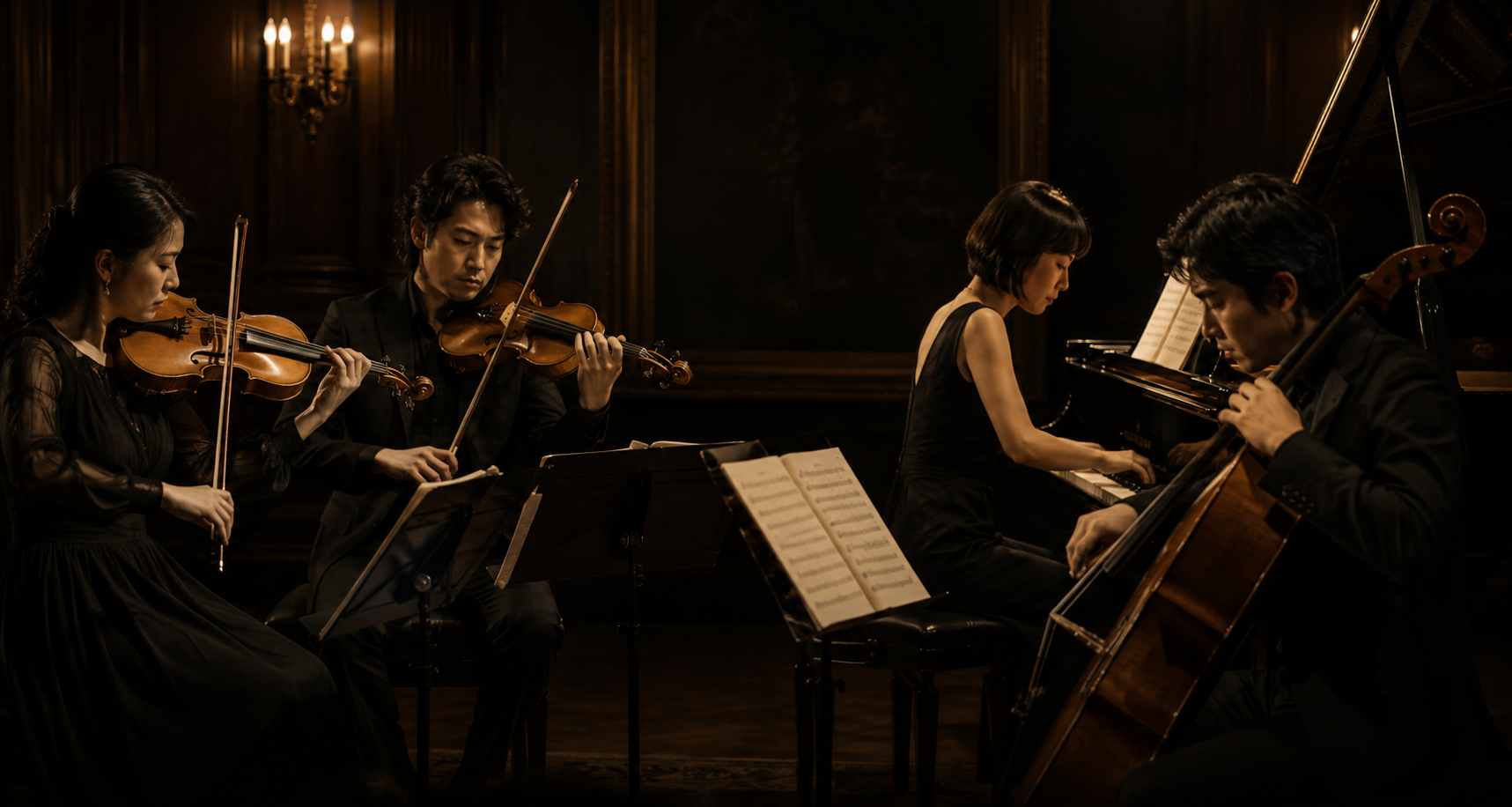
Chamber music occupies one of the most refined spaces in the musical tradition. Unlike the grand scale of the orchestra or the public ceremony of the band, chamber music draws the listener closer — into a world of balance, dialogue, restraint, and carefully shaped musical thought.
Music on a Human Scale
At its heart, chamber music is music written for small groups of instruments, traditionally performed in intimate settings rather than large concert halls. Its scale is modest, but its expressive range is immense. With fewer performers, every musical line matters. Each instrument contributes not only sound, but character, response, tension, and resolution.
This is music that often rewards attentive listening. A phrase passed from violin to cello, a piano answering a clarinet, or a horn adding warmth to a carefully balanced texture can carry as much significance as a full orchestral climax. Chamber music invites the listener to follow musical relationships rather than merely absorb musical spectacle.
The Conversation Between Instruments
Chamber music is frequently described as a conversation, and the comparison is apt. In a string quartet, piano trio, wind quintet, brass ensemble, or mixed chamber group, the instruments seldom operate as mere accompaniment. Instead, they speak to one another, challenge one another, support one another, and occasionally yield the floor.
This conversational quality gives chamber music its distinctive discipline. Balance, timing, listening, and restraint become central. The performers must remain constantly aware of one another, and the listener is drawn into that same web of musical attention.
Forms and Ensembles
The chamber music tradition includes many familiar forms: string quartets, piano trios, sonatas, wind quintets, brass quintets, small vocal ensembles, and mixed instrumental combinations. Some works are elegant and classical in design; others are lyrical, dramatic, experimental, or deeply personal.
The range is broad enough to include the formal clarity of Haydn and Mozart, the emotional intensity of Beethoven and Schubert, the colour of Brahms and Dvořák, and the modern textures of later composers who expanded the chamber idiom into new forms of expression.
Why Chamber Music Matters
Chamber music provides a useful counterweight to musical grandiosity. It reminds us that significance does not always depend on size, volume, or spectacle. Sometimes the most powerful musical experiences emerge from careful proportion, disciplined exchange, and the quiet authority of well-shaped ideas.
Within the wider Music Library, chamber music serves as an important point of reference. It connects instrumental colour, ensemble discipline, historical development, and the art of listening into a single, deeply rewarding tradition.
Listening Approach
For listeners new to chamber music, the best approach is not to rush. Listen for the way instruments enter and withdraw, how themes are shared, how tension is created without excessive force, and how musical ideas develop through exchange. The reward lies not only in melody, but in relationship.
The listening material linked from this section is intended to provide pathways into that tradition — not as a final catalogue, but as a structured invitation to explore the intimacy, discipline, and expressive richness of chamber music.
Reflection Corner
Chamber Music — No Comments
HTML tags allowed in your comment: <a href="" title=""> <abbr title=""> <acronym title=""> <b> <blockquote cite=""> <cite> <code> <del datetime=""> <em> <i> <q cite=""> <s> <strike> <strong>