
Ceremonial & Parade Traditions
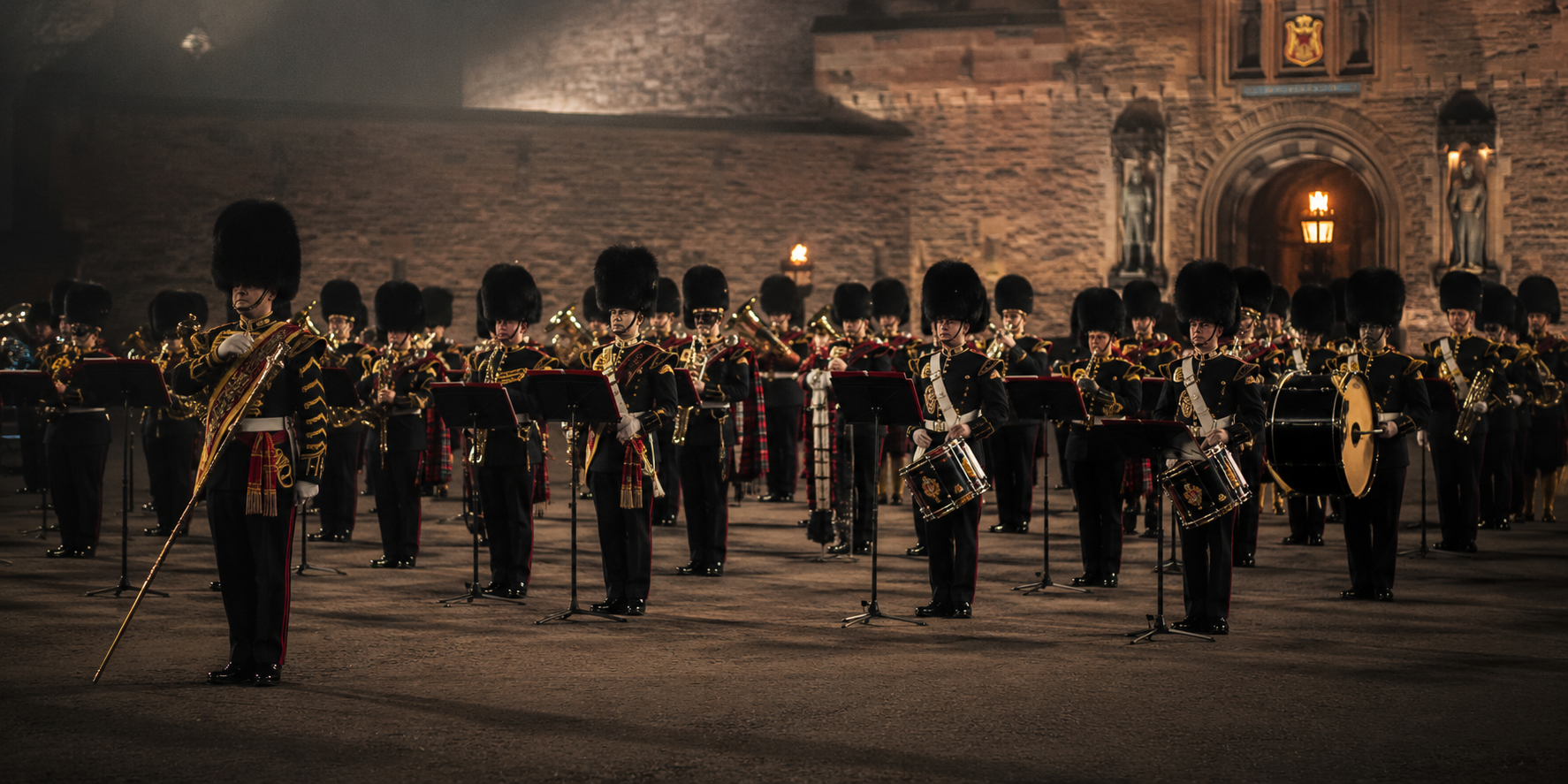
Ceremonial and parade traditions represent the most public expression of the military band — where music, movement, discipline, and public occasion combine within a structured and dignified form of collective performance.
Origins of Ceremony and Movement
The ceremonial tradition has its roots in the practical use of music to organise movement, signal command, and give rhythm to collective action. Drums, bugles, fifes, and brass instruments once served functional purposes in military life, but over time these practical origins developed into formal traditions of public ceremony and musical display.
What began as communication and coordination gradually became ritual. The sound of the military band came to accompany parades, commemorations, state occasions, and public gatherings, giving musical shape to moments of order, remembrance, and collective identity.
The Musical Language of the Parade Ground
Marches naturally occupy a central place within ceremonial and parade music. Their clear rhythm, strong melodic lines, and measured pacing make them ideally suited to movement and formation. Yet the tradition extends well beyond marching music alone.
Ceremonial programmes often include fanfares, hymn settings, overtures, patriotic works, orchestral transcriptions, reflective pieces, and concert selections. This variety gives the parade tradition both public immediacy and musical depth.
Massed Bands and Public Display
Massed bands, military tattoos, changing-of-the-guard ceremonies, and large ceremonial parades demonstrate the visual and musical power of coordinated performance. In these settings, the band is not merely heard; it is seen as part of a larger ceremonial design.
The impact comes from formation, timing, discipline, and scale. The finest performances avoid empty spectacle by allowing structure and precision to carry the occasion. Movement, sound, and visual order become part of the same musical experience.
Discipline, Structure, and Ensemble Identity
What distinguishes ceremonial military performance is the subordination of individual display to collective purpose. Every phrase, step, entry, and cadence depends on disciplined coordination. The result is a form of music-making in which ensemble identity is more important than personal prominence.
This emphasis on unity gives ceremonial band music its particular authority. It is music shaped by balance, timing, restraint, and projection — qualities that allow large ensembles to communicate dignity without excess.
The Continuing Ceremonial Tradition
Today, ceremonial and parade bands continue to occupy an important place in public musical life. They support national occasions, civic events, remembrance services, formal ceremonies, military tattoos, and public celebrations, while also preserving a repertoire that connects contemporary audiences with older traditions of organised ensemble performance.
The playlists gathered here reflect that breadth. Some performances emphasise grandeur and public display; others reveal refinement, restraint, and surprising musical subtlety. Together they show how music, movement, and collective discipline continue to give the military band tradition its enduring presence.
Reflection Corner
Ceremonial & Parade Traditions — No Comments
HTML tags allowed in your comment: <a href="" title=""> <abbr title=""> <acronym title=""> <b> <blockquote cite=""> <cite> <code> <del datetime=""> <em> <i> <q cite=""> <s> <strike> <strong>