
Military Bands — Discipline, Ceremony, and the Sound of Public Occasion
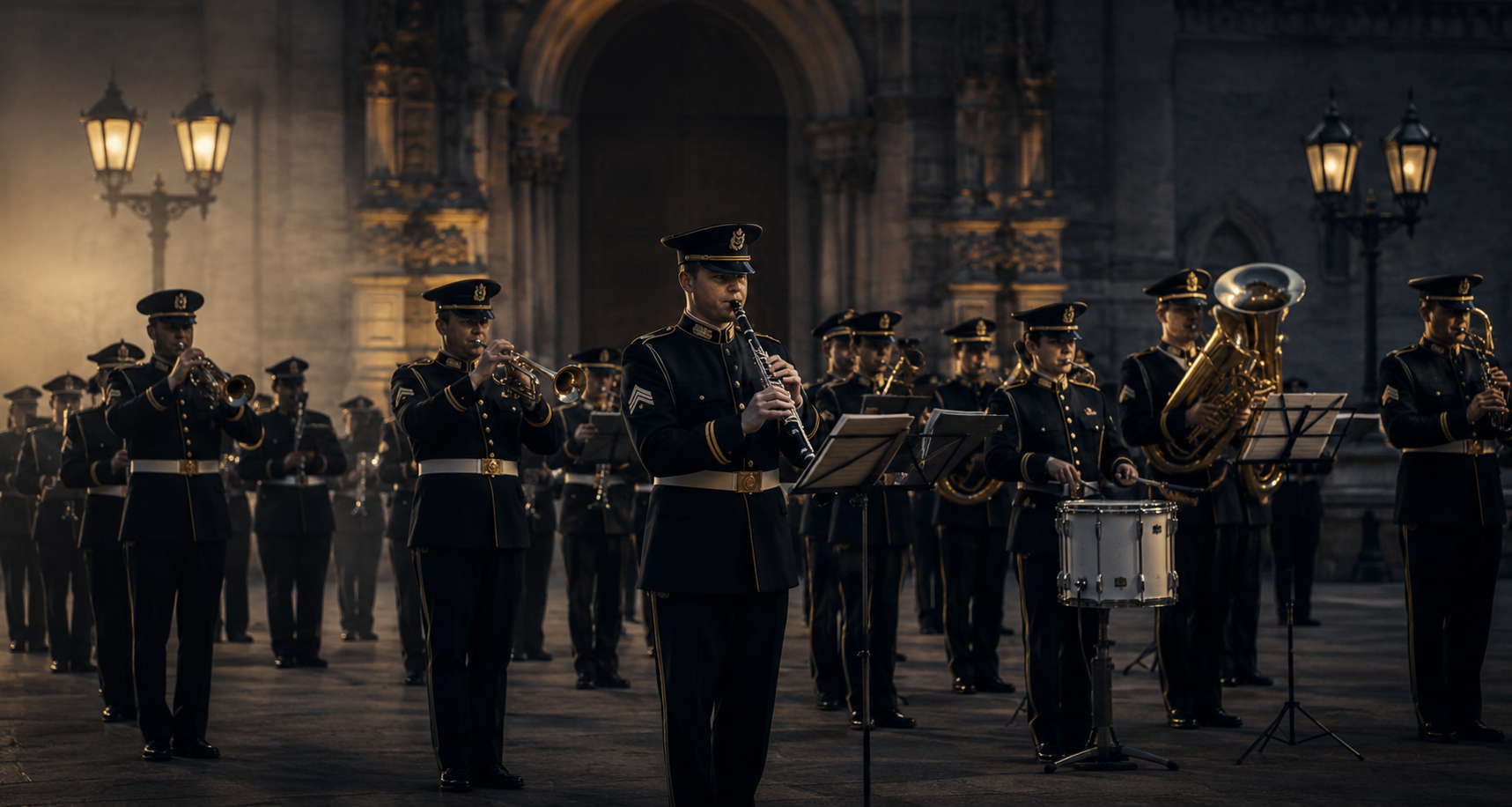
Military bands occupy a distinctive place in the wider world of music. Their purpose has never been limited to entertainment alone. They have served as signals, symbols, ceremonial voices, morale builders, and disciplined musical organisations shaped by duty, tradition, and public presence.
Music With a Public Function
The military band has long stood at the meeting point between music and civic life. Whether heard on parade, at state occasions, during memorial services, or in formal concerts, its sound carries more than melody. It conveys order, continuity, remembrance, and collective identity.
From Signal to Ceremony
The earliest military music was practical. Drums, bugles, fifes, and trumpets were used to communicate commands, regulate movement, and maintain formation. Over time, these functional sounds developed into more elaborate musical traditions, eventually giving rise to organised bands capable of performing marches, hymns, transcriptions, patriotic works, and concert repertoire.
The March as Musical Architecture
The march is central to the military band tradition. Its steady pulse, clear structure, and forward motion reflect the requirements of disciplined movement, but the best marches are far more than functional pieces. They combine memorable melody, rhythmic certainty, contrast, and ceremonial dignity in a form that remains immediately recognisable.
Sound, Uniformity, and Presence
Military bands often project a sound that is direct, balanced, and purposeful. Brass, woodwind, and percussion combine to create clarity and reach, while the visual discipline of the ensemble reinforces the character of the music. The result is a form of performance in which sound, movement, dress, and occasion become part of a single public statement.
Beyond the Parade Ground
Although closely associated with ceremonial duties, many military bands have also become accomplished concert ensembles. Their programmes may include classical arrangements, national music, film themes, light music, hymns, and original works for wind band. In this role, they preserve tradition while demonstrating considerable musical versatility.
Why Military Bands Matter
Military bands remind us that music can serve public memory as well as private enjoyment. They give form to ceremony, lend dignity to remembrance, and provide a disciplined musical voice for occasions where words alone may be insufficient. Their music is therefore not merely heard; it is experienced as part of a larger act of recognition.
Reflection Corner
Military Bands — No Comments
HTML tags allowed in your comment: <a href="" title=""> <abbr title=""> <acronym title=""> <b> <blockquote cite=""> <cite> <code> <del datetime=""> <em> <i> <q cite=""> <s> <strike> <strong>