
Salvation Army Bands
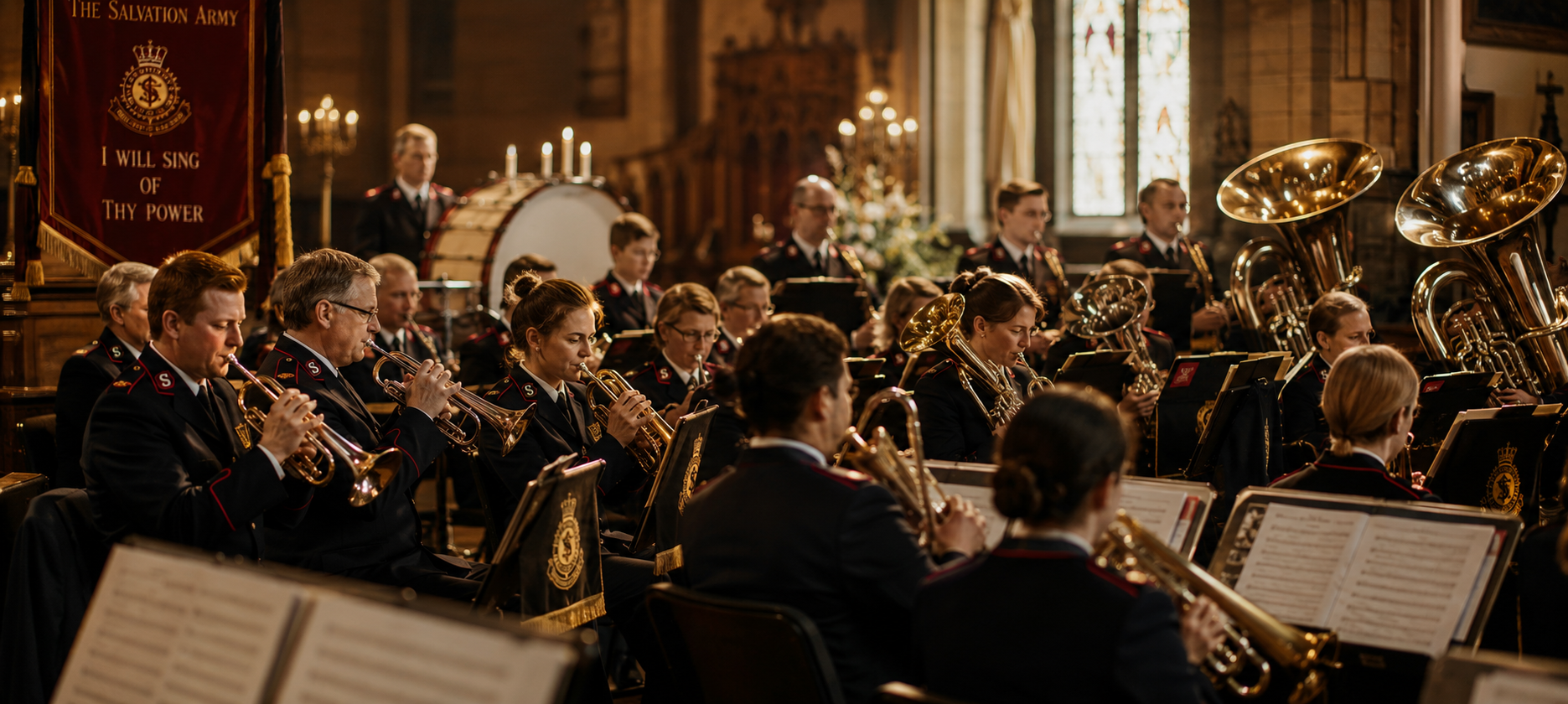
The Salvation Army band tradition occupies a distinctive position within the wider brass band world. While sharing instrumentation, discipline, and ensemble structure with contesting and ceremonial brass traditions, Salvation Army bands emerged from an entirely different purpose: not performance for prestige, but music in service of faith, community, and public outreach.
From city streets and public squares to churches, community halls, and international gatherings, these ensembles developed a musical language grounded in warmth, clarity, and collective expression. Their role has traditionally extended beyond entertainment. The music functions as communication — reflective, devotional, encouraging, and often deeply personal to both performers and listeners.
What distinguishes Salvation Army bands is the balance they maintain between technical discipline and spiritual intention. Precision matters, but virtuosity is rarely pursued for its own sake. Even in highly accomplished performances, the emphasis remains on ensemble unity, tonal warmth, lyrical shaping, and the ability of music to convey sincerity rather than spectacle.
The repertoire reflects this orientation. Traditional hymn settings, tone poems, meditations, festival arrangements, marches, and concert works coexist within a tradition that values accessibility alongside craftsmanship. Some works are quiet and contemplative, others celebratory and expansive, but most retain a recognisable sense of structure, restraint, and melodic clarity.
The Salvation Army movement also contributed significantly to the development of brass band culture itself. Through publishing, teaching, youth development, composer support, and international touring, Salvation Army bands helped sustain and expand the broader brass tradition across multiple continents. Many influential brass composers, arrangers, and conductors either emerged from or were shaped by this environment.
Listening to these ensembles reveals a form of brass playing that is less concerned with theatrical impact than with balance, blend, atmosphere, and shared purpose. The result is music that often feels dignified, reflective, and grounded — capable of conveying both quiet intimacy and large-scale ceremonial strength without abandoning its essential humanity.
This section explores the broad landscape of Salvation Army brass music: traditional and modern repertoire, festival performances, devotional works, concert recordings, historic ensembles, contemporary groups, and the composers and arrangers who helped shape one of the most enduring collective brass traditions in the world.
Reflection Corner
Salvation Army Bands — No Comments
HTML tags allowed in your comment: <a href="" title=""> <abbr title=""> <acronym title=""> <b> <blockquote cite=""> <cite> <code> <del datetime=""> <em> <i> <q cite=""> <s> <strike> <strong>