
When the Ground Tells the Truth
Reflections from the garden armchair
There are moments when gravity intrudes upon public life in the most literal way. A fall from height — whether accidental, deliberate, or unexplained — halts the noise of commentary, not because of spectacle, but because it exposes the limits of assumption, recognition, and certainty.
A question often surfaces in such moments: would the person be recognisable? It is a natural question, yet it reveals how much we rely on appearance to anchor meaning. In forensic reality, however, recognition by sight alone is frequently unreliable after a fall from significant height. The forces involved can alter the very features by which we think we “know” someone.
This is why functioning institutions do not trust first impressions.
Professional investigators are trained to set aside visual familiarity and defer instead to process. Fingerprints, where possible. Dental records. DNA. Medical implants and radiographic comparisons. Bureaucratic remnants of a life — usually ignored, often resented — suddenly become the most truthful witnesses available.
This is not detachment. It is respect.
A competent system understands that dignity lies in accuracy, not exposure; in method, not haste. Families are spared the cruelty of uncertainty not through conjecture, but through discipline. Shock is replaced with procedure. Speculation with evidence.
There is a wider lesson here, one that extends well beyond forensic science.
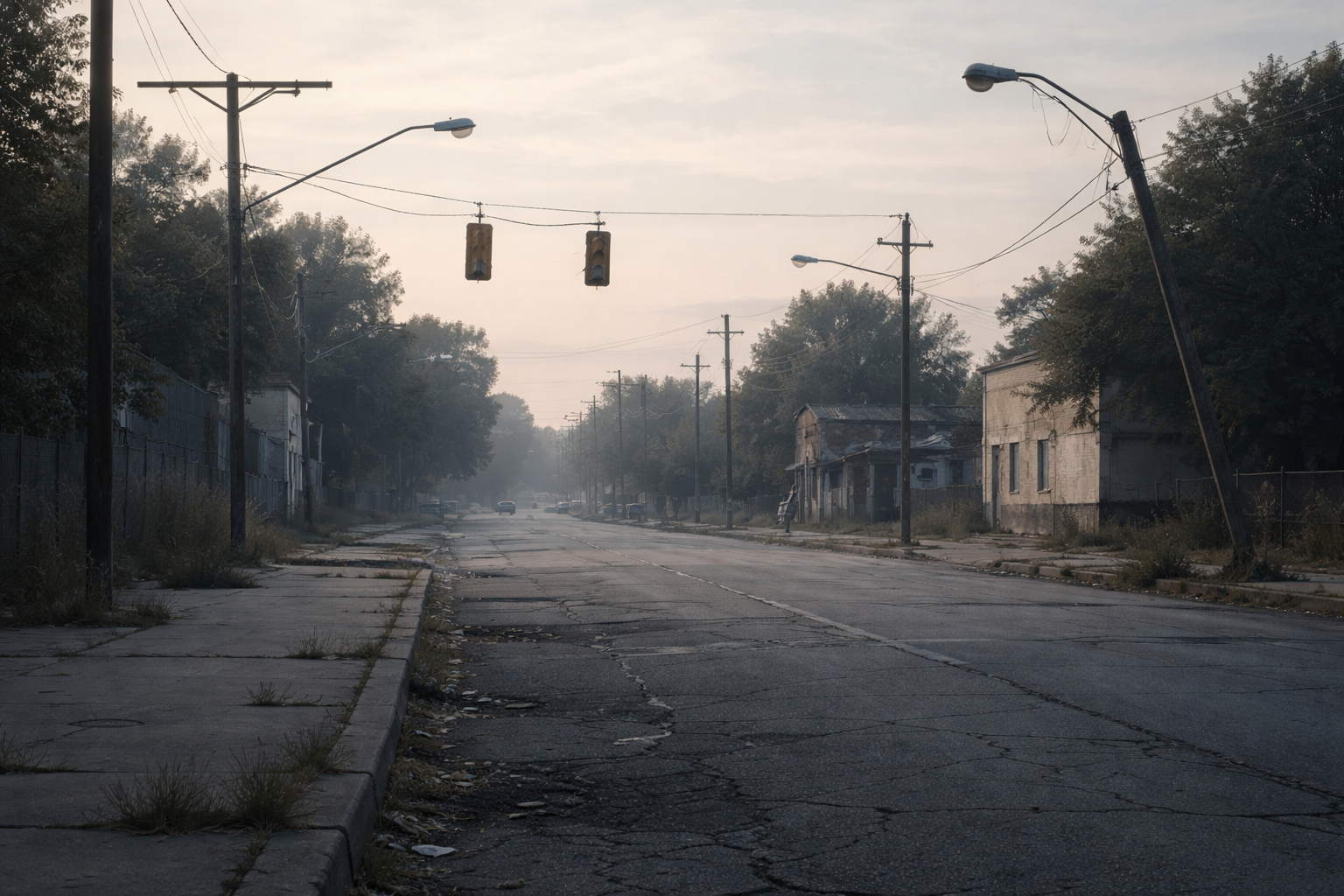
We live amid widespread institutional failure, where appearance has replaced function and narrative substitutes for evidence. Municipalities collapse, services decay, and yet official responses are often performative rather than corrective. In such environments, instinct, ideology, and optics are allowed to outrun verification and professional judgment.
By contrast, where institutions still work — quietly, methodically — they insist on slowing things down. They resist premature conclusions. They allow truth to emerge only once the evidence has spoken.
Perhaps that is the uncomfortable parallel.
When systems fail, we are left with noise, accusation, and spectacle. When systems function, even tragedy is handled with restraint, competence, and care.
That contrast becomes stark when one turns one’s gaze to local government. Municipal collapse is not the result of mystery or unforeseeable forces; it is the predictable outcome of abandoning process, hollowing out expertise, and replacing professional judgment with political expediency. Where forensic systems insist on evidence before conclusion, many municipalities operate in reverse — decisions first, justification later, if at all.
Infrastructure fails because maintenance schedules are ignored. Finances implode because controls are treated as optional. Accountability evaporates because responsibility is endlessly deferred. In such environments, truth is neither patiently established nor quietly respected; it is shouted down by narrative, ideology, and blame. The result is urban decay that mirrors institutional decay — both are visible long before anyone is willing to acknowledge them.
From the garden armchair, the parallel is unsettling but instructive. Where competence survives, even tragedy is handled with care, restraint, and discipline. Where governance has collapsed, even routine administration becomes a crisis. The lesson is plain: societies do not decline because problems are too complex to solve, but because the habits of professionalism required to solve them have been allowed to wither. When that happens, truth still emerges eventually — but only after unnecessary damage has already been done.
Reflection Corner
When the Ground Tells the Truth — No Comments
HTML tags allowed in your comment: <a href="" title=""> <abbr title=""> <acronym title=""> <b> <blockquote cite=""> <cite> <code> <del datetime=""> <em> <i> <q cite=""> <s> <strike> <strong>