
Turning Promises into Progress
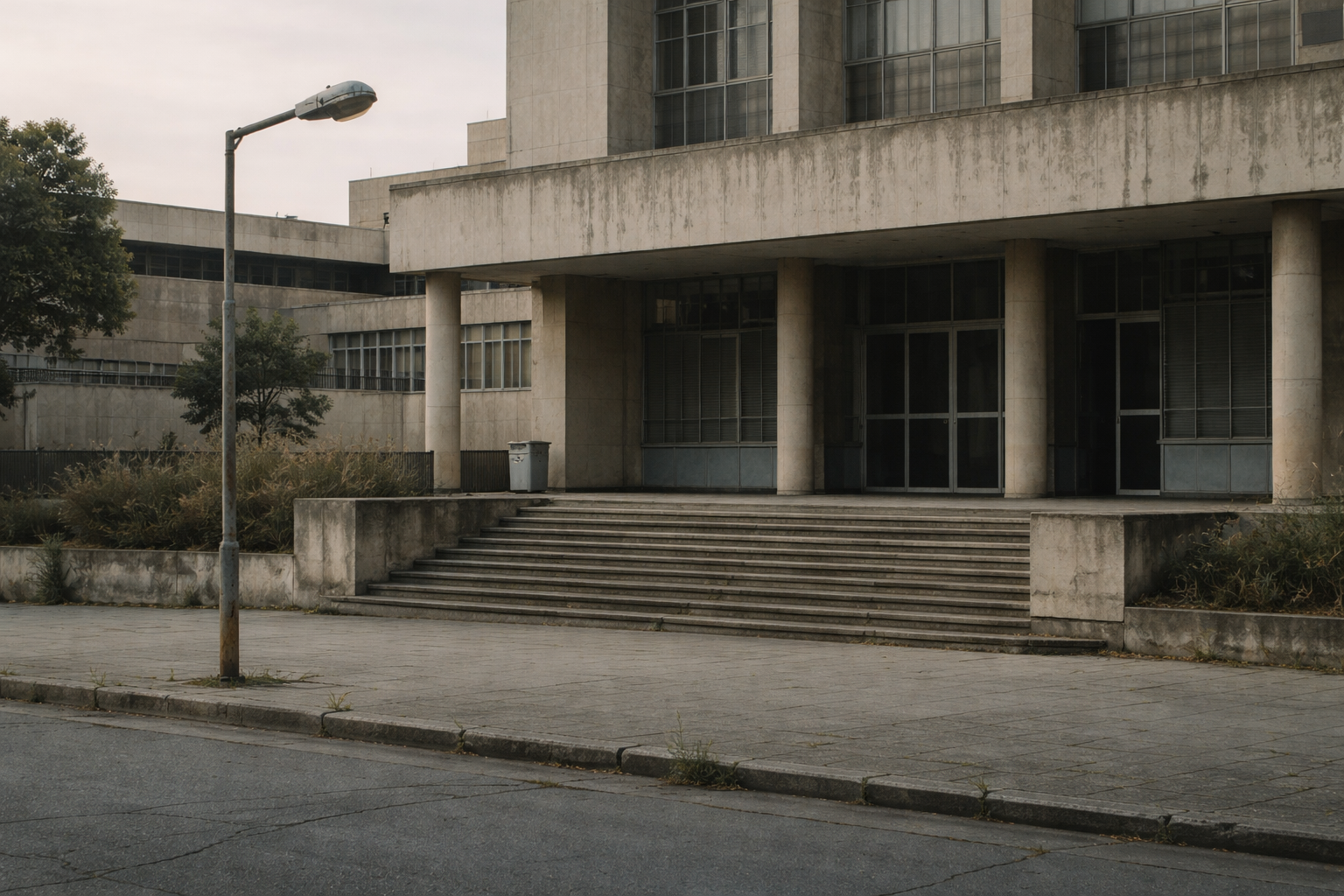
Heracles, the Stables, and the Illusion of Renewal
There is a temptation, in moments of national strain, to search for novelty in language rather than substance in action. “Renewal” is one such word. It has been spoken often enough in South Africa to acquire the cadence of reassurance, yet not often enough to acquire the weight of consequence.
The recent revival of this rhetoric — now framed within a Government of National Unity — invites a more careful reading. Not because the aspiration is wrong, but because the gap between promise and performance has become too familiar to ignore.
A classical metaphor may help illuminate the moment.
In Greek mythology, Heracles is tasked with cleaning the Augean Stables — a task rendered impossible by years of accumulated filth. The solution does not lie in effort alone, but in the courage to divert entire rivers through the structure, washing away what manual labour cannot.
South Africa, at present, resembles those stables.
The GNU: More Hands, Same Constraints
The GNU was presented as a watershed — a broadening of political responsibility that might finally allow competence, discipline, and accountability to re-enter the machinery of the state. In theory, it brought more hands into the stable.
In practice, it brought more buckets — not rivers.
President Ramaphosa, cast once again as the custodian of renewal, occupies an unenviable role. He did not create the full measure of the decay, but he has repeatedly claimed the mandate to reverse it. Yet he remains constrained by the same political architecture that allowed the dysfunction to accumulate: party discipline, factional balance, and an enduring reluctance to disturb entrenched interests.
Coalition partners — particularly those with technocratic instincts — have been invited into the structure, but not given access to its foundations. They may sweep, advise, and stabilise at the margins, but they are not permitted to alter the drainage.
The result is a GNU that looks stable, yet feels brittle: a system of shared responsibility without shared authority.
The G20: Global Fluency, Domestic Fragility
Nowhere is this tension more visible than in South Africa’s posture on the global stage.
At the G20 table, South Africa speaks with confidence and moral clarity — about inequality, climate resilience, multilateral reform, and the voice of the Global South. The diplomacy is polished. The language is assured. The role is earned.
Yet this external fluency sits uneasily alongside internal reality.
A state that struggles to maintain municipal water systems, electricity distribution, and basic service delivery is simultaneously presenting itself as a steward of global governance. The contradiction is not lost on international partners. Diplomatic courtesy may obscure it temporarily, but credibility is ultimately measured in execution, not eloquence.
The G20 has become a kind of varnish — not deception, but emphasis — highlighting South Africa’s strengths while softening the visibility of its administrative fatigue. Increasingly, however, the cracks show through.
BRICS and the G7: Two Audiences, Divergent Expectations
South Africa’s ambiguous positioning between BRICS and the G7 further sharpens the dilemma.
To Western partners, South Africa is valued for institutional familiarity and democratic continuity — but judged increasingly on delivery. Stability without performance invites caution.
To BRICS partners, ambiguity is less problematic. Internal disorder is not disqualifying; it can even be advantageous. South Africa’s value here lies less in capacity and more in symbolism — a bridge, a voice, a presence.
Thus, South Africa risks becoming dependable to neither camp: too fragile for those who prize execution, too constrained for those who prize alignment.
This duality is not the result of foreign policy confusion alone. It reflects unresolved tensions at the heart of domestic governance.
2027: The Sluice Gates
All of this converges on a single inflection point: the ANC’s 2027 national conference.
That gathering will determine whether renewal remains a motif or becomes a method.
Three broad paths suggest themselves:
- Continuity without disruption — a new custodian, familiar rhetoric, and minimal disturbance to the existing political plumbing.
- Ideological retrenchment — a rejection of coalition pragmatism and a reassertion of doctrinal purity, at the cost of state capacity.
- Managed reform — an acceptance that coalition governance is the new normal, and that selective but genuine institutional repair is necessary for survival.
Only the third path meaningfully resembles the Heraclean solution — the diversion of rivers rather than the redistribution of brooms.
Yet it is also the most politically demanding. It requires the ANC to accept limits on its own discretion, to professionalise administration in earnest, and to distinguish party renewal from state renewal — a distinction it has long resisted.
Watching the Stables
Until 2027, renewal will remain a claim rather than a conclusion. The signals worth watching are not speeches, but decisions:
- whether cadre deployment is ever confronted rather than lamented,
- whether municipalities are allowed to fail and be rebuilt, rather than endlessly “intervened” in,
- whether coalition partners are treated as temporary inconveniences or long-term co-custodians,
- whether foreign policy coherence improves alongside domestic capacity.
If rivers are diverted, even partially, the stables will begin to smell different. If not, the choreography of renewal will continue — tidy on the surface, familiar beneath.
A Closing Thought
Mythology endures not because it flatters, but because it warns.
Heracles succeeded not by working harder, but by recognising that some problems cannot be solved within the constraints that created them. South Africa’s challenge is not a lack of plans, policies, or promises. It is a reluctance to disturb the structures that make failure repeatable.
Until that changes, renewal will remain something we speak about fluently — and practice sparingly — from the comfort of well-rehearsed platforms.
Reflection Corner
Turning Promises into Progress — No Comments
HTML tags allowed in your comment: <a href="" title=""> <abbr title=""> <acronym title=""> <b> <blockquote cite=""> <cite> <code> <del datetime=""> <em> <i> <q cite=""> <s> <strike> <strong>