
Flugel Horn
The Flugel Horn — Warmth, Colour, and the Softer Edge of Brass
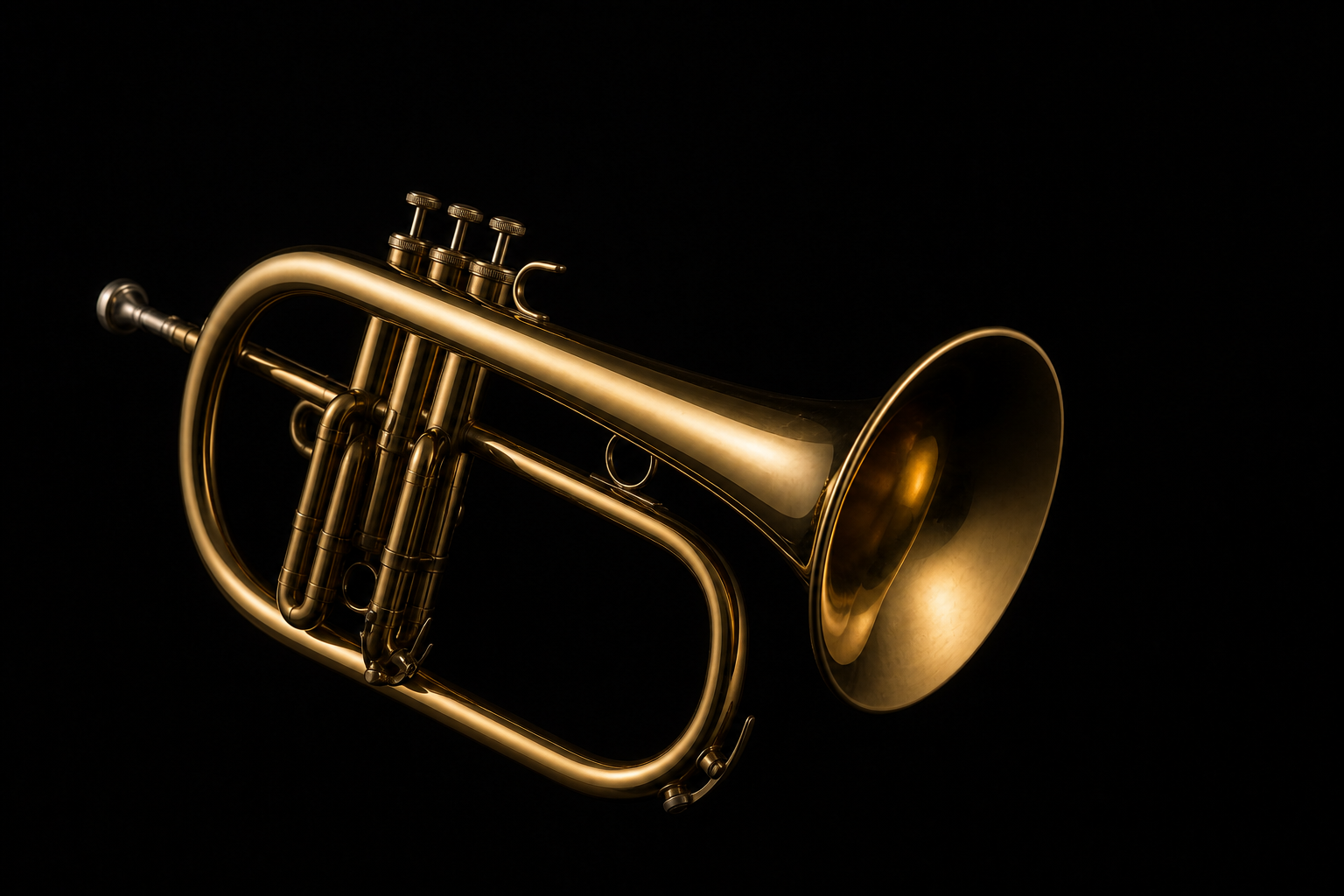
The flugel horn occupies a gentler space within the brass family. Similar in outline to the trumpet, yet markedly different in character, it softens the upper brass voice, replacing brilliance with warmth and directness with colour.
A Softer Branch of the Brass Family
The flugel horn developed from military and signalling instruments, but its musical identity moved steadily away from command and announcement. While related to the trumpet in pitch and fingering, its broader, more conical design gives it a warmer and more rounded voice.
This distinction is central to its character. The flugel horn does not merely duplicate the trumpet at a softer dynamic level; it offers a different colour altogether — less penetrating, more blended, and often more intimate.
Tone, Design, and Character
The flugel horn’s conical bore and wider bell produce a tone that is mellow, dark, and lyrical. Where the trumpet projects with definition, the flugel horn spreads its sound more gently, creating warmth rather than edge.
This makes it especially suited to melodic writing where tenderness, reflection, or emotional shading is required. It can carry a line clearly, but rarely with aggression. Its strength lies in persuasion rather than declaration.
Role Within the Ensemble
In brass and wind ensembles, the flugel horn often provides colour between the sharper upper brass and the warmer middle voices. It can soften transitions, enrich melodic passages, and add a more vocal quality to exposed lines.
Its role is not usually structural in the way the trombone is, nor directional like the trumpet. Instead, it contributes atmosphere — changing the emotional temperature of the ensemble without disturbing its balance.
Across Musical Traditions
The flugel horn has found a natural home in brass bands, wind bands, and jazz. In brass bands it provides a distinctive solo colour, often used for lyrical passages that require warmth and expressive depth.
In jazz, the instrument has become closely associated with reflective, intimate playing. Its sound allows players to retain brass phrasing while moving away from the sharper brilliance of the trumpet.
Repertoire and Technical Demand
Although it shares much of its technique with the trumpet, the flugel horn requires a different discipline of tone. Its broader sound can lose focus if not carefully controlled, and its expressive power depends on breath, balance, and restraint.
The finest flugel horn playing is not simply soft trumpet playing. It demands a separate tonal imagination — one that values colour, line, and emotional patience.
A Voice of Warm Definition
The flugel horn reminds us that clarity need not always be bright. It defines musical thought through warmth, colour, and lyrical ease, offering the ensemble a voice that is both present and gently absorbed into the whole.
Where the trumpet announces, the flugel horn confides. Its authority lies in its ability to soften the edge without weakening the message.
Notable Flugel Horn Artists
The flugel horn’s character is revealed through players who understand its balance of warmth and control. The following artists demonstrate the instrument’s lyrical colour and expressive subtlety.