
French Horn
The French Horn — Contour, Blend, and the Inner Voice of the Ensemble
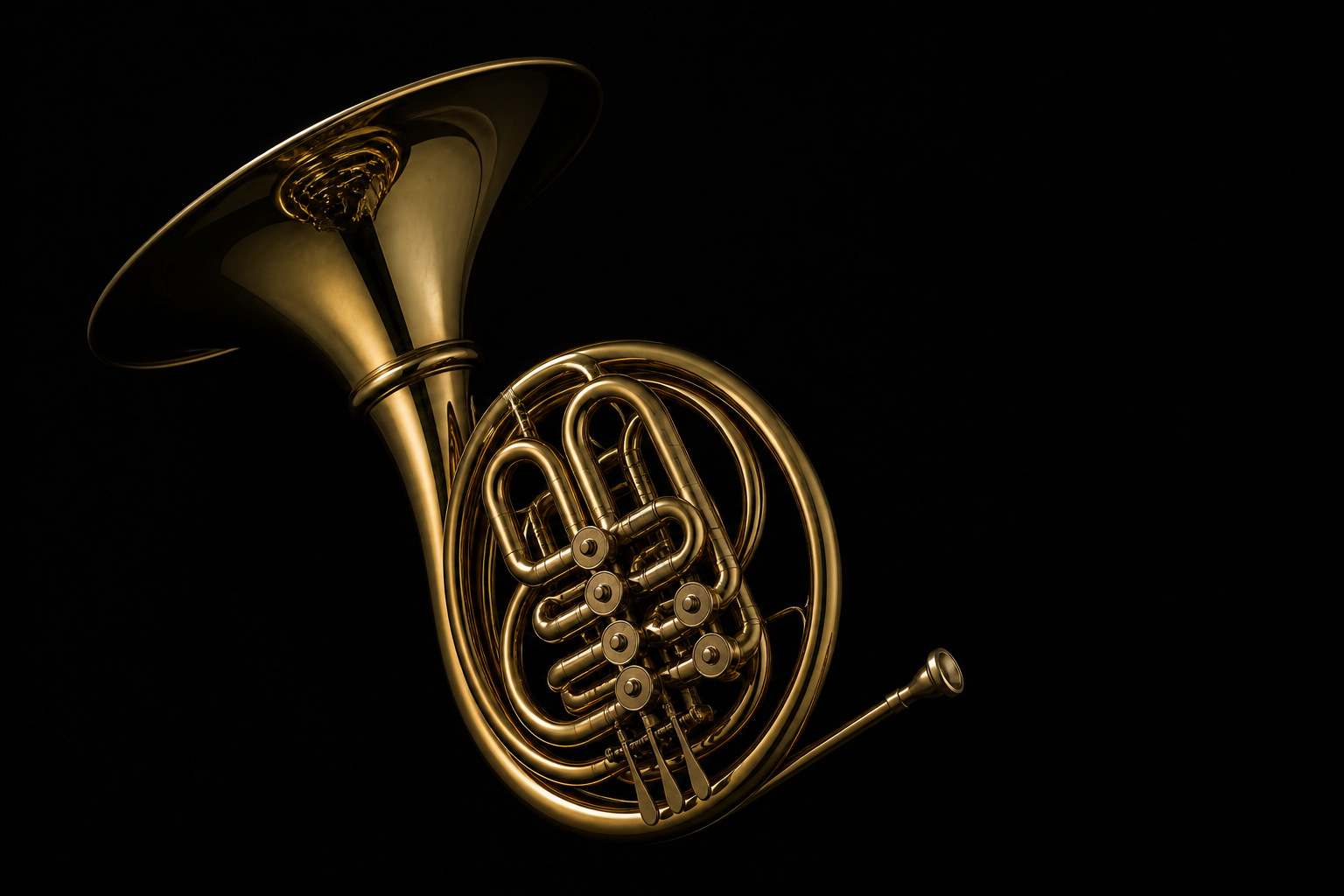
The French horn occupies a position of quiet complexity within the brass family. Its voice does not seek prominence, yet it shapes the inner contour of the ensemble, binding harmonic movement with a tone that is both noble and elusive.
An Instrument Turned Inward
The horn’s origins lie in the hunting horn, an instrument of signal rather than melody. Over time, it evolved into a fully chromatic orchestral voice, retaining something of its original character — not in function, but in tone and direction.
Unlike other brass instruments, the horn projects backward and inward. Its bell faces away from the audience, and its sound is shaped as much by the player’s hand as by the instrument itself.
Tone, Design, and Character
The horn’s tightly coiled tubing and conical bore produce a sound that is neither overtly bright nor heavily grounded. Instead, it occupies a space between — capable of warmth, distance, and subtle intensity.
Its tone can suggest landscape rather than line, atmosphere rather than statement. It blends readily, yet when exposed, carries a distinctive, almost vocal ambiguity.
Role Within the Ensemble
In the ensemble, the horn often operates within the interior structure. It connects harmonic movement, supports melodic transitions, and provides colour that is felt more than explicitly heard.
It rarely defines direction in the way a trumpet does, nor anchors the structure like the lower brass. Instead, it mediates — shaping the space between voices.
A Voice of Subtle Authority
The horn’s strength lies in its restraint. It does not impose itself upon the music, yet its absence would leave a perceptible gap. It is an instrument of interior logic, giving cohesion to the ensemble without drawing attention to itself.
Notable Horn Artists
The horn’s subtlety becomes most apparent in the hands of players who understand its balance of control and colour. The following artists demonstrate the instrument’s unique voice within both ensemble and solo contexts.