
Trombone
The Trombone — Power, Line, and the Architecture of Brass
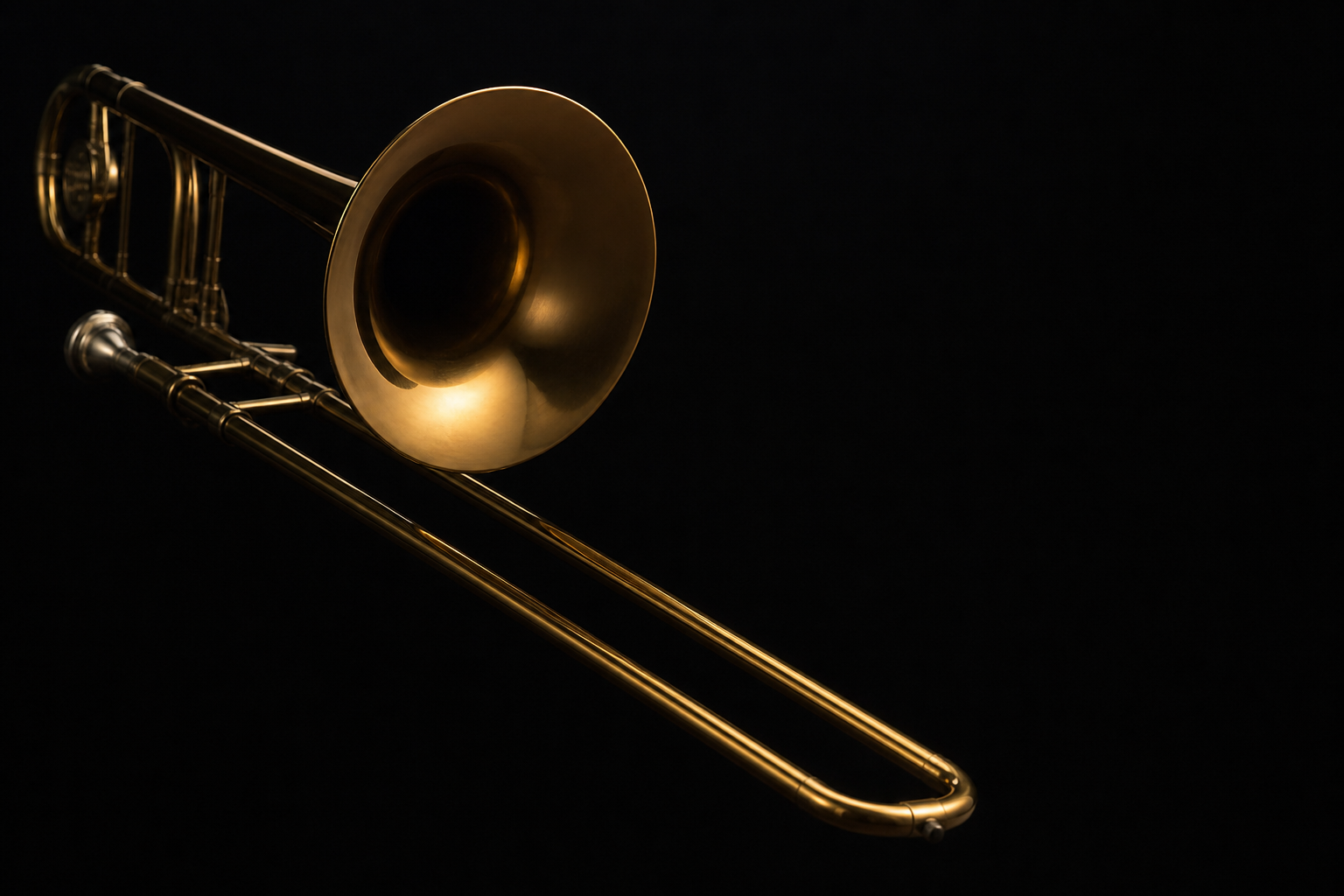
The trombone occupies a distinctive place within the brass family. Its voice is direct, resonant, and unmistakably human in its flexibility. Capable of solemn weight, rhythmic force, and lyrical breadth, it gives the ensemble both structural strength and expressive authority.
Origins of a Sliding Voice
The trombone’s ancestry reaches back to the Renaissance sackbut, an instrument already recognisable by its defining feature: the slide. Long before valves transformed other brass instruments, the slide allowed the trombone to move smoothly between pitches and play fully chromatic lines with remarkable accuracy.
This made the trombone unusually adaptable. It could reinforce sacred choral music, support ceremonial occasions, and later take its place in orchestras, bands, and brass ensembles. Its design changed relatively little compared with many other brass instruments, a testament to the effectiveness of its original principle.
The trombone was not invented to solve a narrow technical problem. It endured because its voice filled a musical need: a brass instrument capable of both line and weight.
Tone, Design, and Character
Unlike valved brass instruments, the trombone speaks through a slide mechanism that gives it a uniquely continuous relationship with pitch. This contributes to its vocal quality: it can sing, declaim, warn, support, or overwhelm, depending on how it is used.
Its cylindrical bore gives the trombone a focused and projecting sound, but its register places it closer to the body of the ensemble than the trumpet. It is brighter and more directional than the euphonium, yet broader and weightier than the upper brass.
This combination makes the trombone a powerful architectural voice. It can define harmonic pillars, strengthen climactic passages, and provide muscular support without losing clarity.
Role Within the Ensemble
In the brass ensemble, the trombone often functions as a structural beam. It reinforces harmony, gives depth to rhythmic figures, and provides a firm connection between the upper brass and the lower foundation.
Trombone writing can be noble, dramatic, comic, solemn, or forceful. Few instruments move so readily between dignity and bite. This gives composers and arrangers a wide expressive range, from broad chorale-like passages to sharply articulated rhythmic statements.
Because the instrument’s sound is so exposed, trombone sections demand disciplined ensemble playing. Intonation, slide accuracy, balance, and timing must be carefully controlled, or the strength of the instrument quickly becomes bluntness.
The Trombone Across Traditions
In orchestral music, the trombone has long been associated with gravity, grandeur, and dramatic emphasis. It often appears at moments where the music requires weight, authority, or solemn intensity.
In brass bands and wind bands, the trombone section provides both harmonic power and rhythmic definition. It can sit within the ensemble as a reinforcing voice or move to the front as a bold melodic or counter-melodic presence.
In jazz, the trombone reveals another side of its personality. The slide becomes not merely a mechanism, but an expressive tool — capable of nuance, humour, inflection, and deeply personal phrasing.
Repertoire and Technical Demand
Trombone repertoire spans sacred music, orchestral literature, brass band writing, jazz, chamber music, and solo works. Across these settings, the instrument demands more than strength. It requires control, accuracy, breath, and a disciplined ear.
The slide offers great freedom, but that freedom comes with responsibility. Every pitch must be placed deliberately. The finest trombone playing is therefore not merely powerful, but measured, centred, and shaped with intention.
A Voice of Structure and Force
The trombone gives brass music its frame. It strengthens the centre, supports the foundation, and adds authority where the music requires substance rather than ornament.
Its voice can be majestic, severe, playful, or lyrical, but it is rarely incidental. When the trombone enters, the musical structure becomes more visible. It reminds the listener that power, when properly controlled, need not be crude — it can be architectural.
Notable Trombone Artists
The trombone’s range of character is best understood through players who have mastered both its strength and its subtlety. The following artists demonstrate the instrument’s authority, flexibility, and expressive breadth.